Skip to main content

Don Fountain Featured Speaker at University of Wisconsin’s 38th Annual Product Safety and Liability Conference
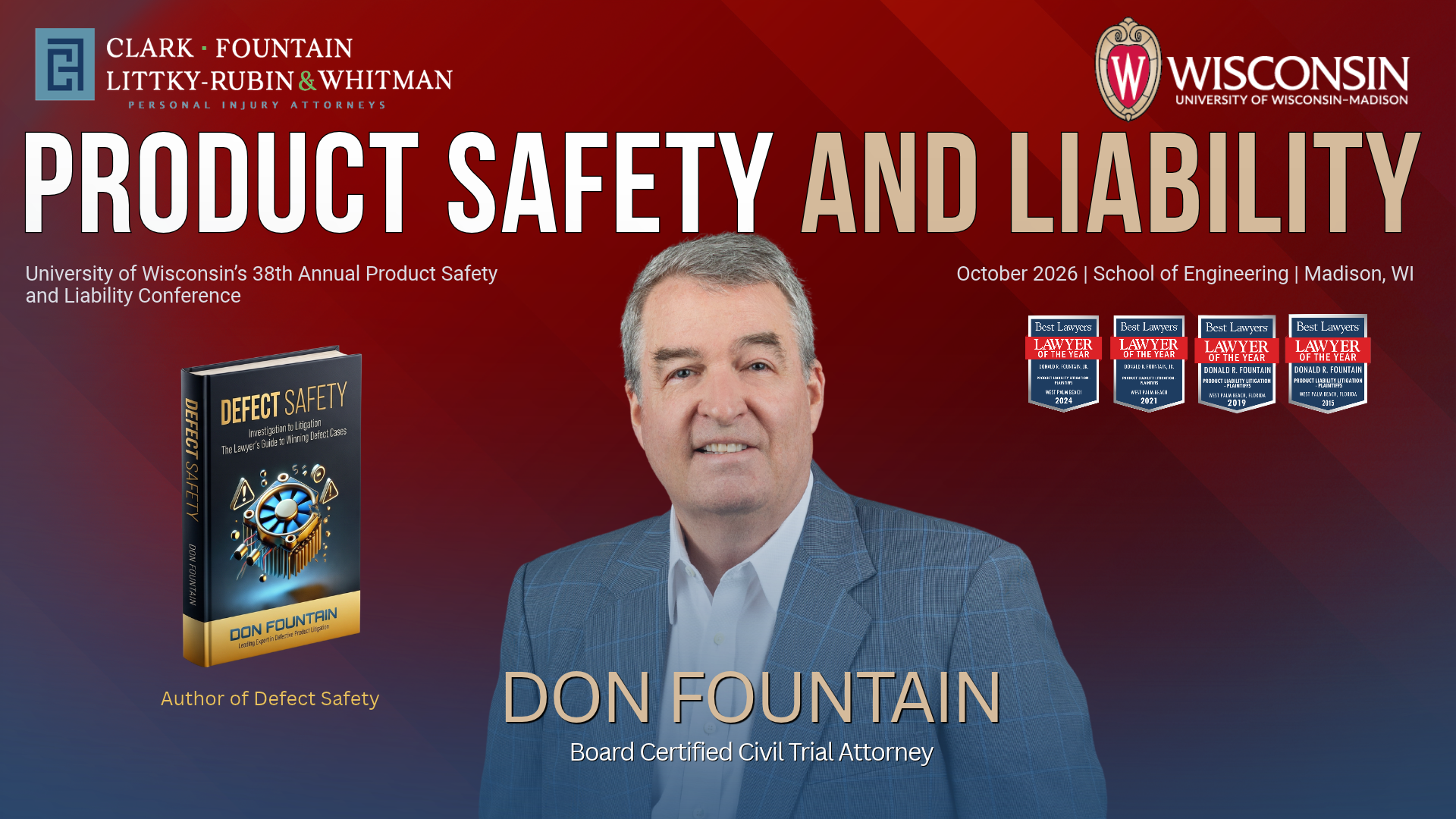
Don Fountain, a nationally recognized plaintiff trial attorney who has devoted his career to representing individuals and families affected by catastrophic injuries and deaths caused by defective products, was a featured speaker at the University of Wisconsin Madison’s 38th Annual Product Safety and Liability Conference, held October 13 through 15, 2026.
Following the publication of his book, Defect Safety, Fountain was approached by the University of Wisconsin’s College of Engineering to speak on the growing role of artificial intelligence in product liability litigation and manufacturing safety. His decades of experience investigating product failures, working with engineering experts, and holding manufacturers accountable for unsafe products provided a perspective grounded in the prosecution of complex product liability cases.
Fountain was one of the few plaintiff personal injury attorneys invited to speak at the conference, which brought together engineering students and professionals from major manufacturing and engineering firms, regulatory compliance organizations, recall management companies, and law firms representing manufacturers.
His presentation, “AI Tools as Sword & Shield: Using (or Losing) the Litigation Battle Before Trial,” examined how artificial intelligence can be used both to establish liability against manufacturers and to demonstrate their efforts to identify and prevent product safety hazards.
From the plaintiff’s perspective, Fountain explained how attorneys can use AI to investigate defective products, identify previously unrecognized hazards, evaluate safer alternative designs, and uncover evidence of what manufacturers knew or should have known about potential dangers.
Fountain also addressed how manufacturers, engineers, and product safety professionals can use AI to improve product design, conduct hazard analyses, evaluate safety warnings, and monitor warranty claims, consumer complaints, and product failures after sale. He emphasized how these applications can help identify emerging safety concerns before they result in serious injuries.
A central focus of the presentation was the legal importance of establishing and documenting formal AI safety procedures. Fountain explained that manufacturers who proactively investigate hazards, maintain records of their safety evaluations, and act on their findings may be better positioned to defend product liability claims. Conversely, the failure to identify or address discoverable hazards may become evidence of inadequate safety practices in litigation.